A Brief History of the Famous Gunfight at the O.K. Corral
In a Fateful 30 Seconds ...
On the cold afternoon of October 26, 1881, four men in long black coats strode purposefully down Tombstone's dusty Fremont Street. Six cowboys waited around the corner in a narrow vacant lot behind the O.K. Corral. In a fateful thirty seconds, nearly thirty shots were fired at close range. The gunfight between the Earps – lead by Marshal Virgil Earp, his brothers Wyatt and Morgan and their friend, Doc Holliday – and the Clanton-McLaury gang left Billy Clanton and the McLaury brothers dead and Virgil, Morgan, and Doc wounded.
Today we frame this event as a legendary example of Western vigilante justice, where lawmen preserving the peace faced down cattle rustlers suspected of robbing a Wells Fargo stagecoach. But the historical backdrop for this deadly tension is far more complex. After the Civil War, rapid growth in the American industrial economy spurred an interest in Westward expansion. Boomtowns like Tombstone provided fertile ground for the continuation of the war's sectional strife in the Western territories. Wealthy Northern mine owners and businessmen jockeyed with Southern cowboys from Texas for control and power. Each faction brought its economic, political, and social conflicts to the Arizona Territory – and to the Gunfight at the O.K. Corral.
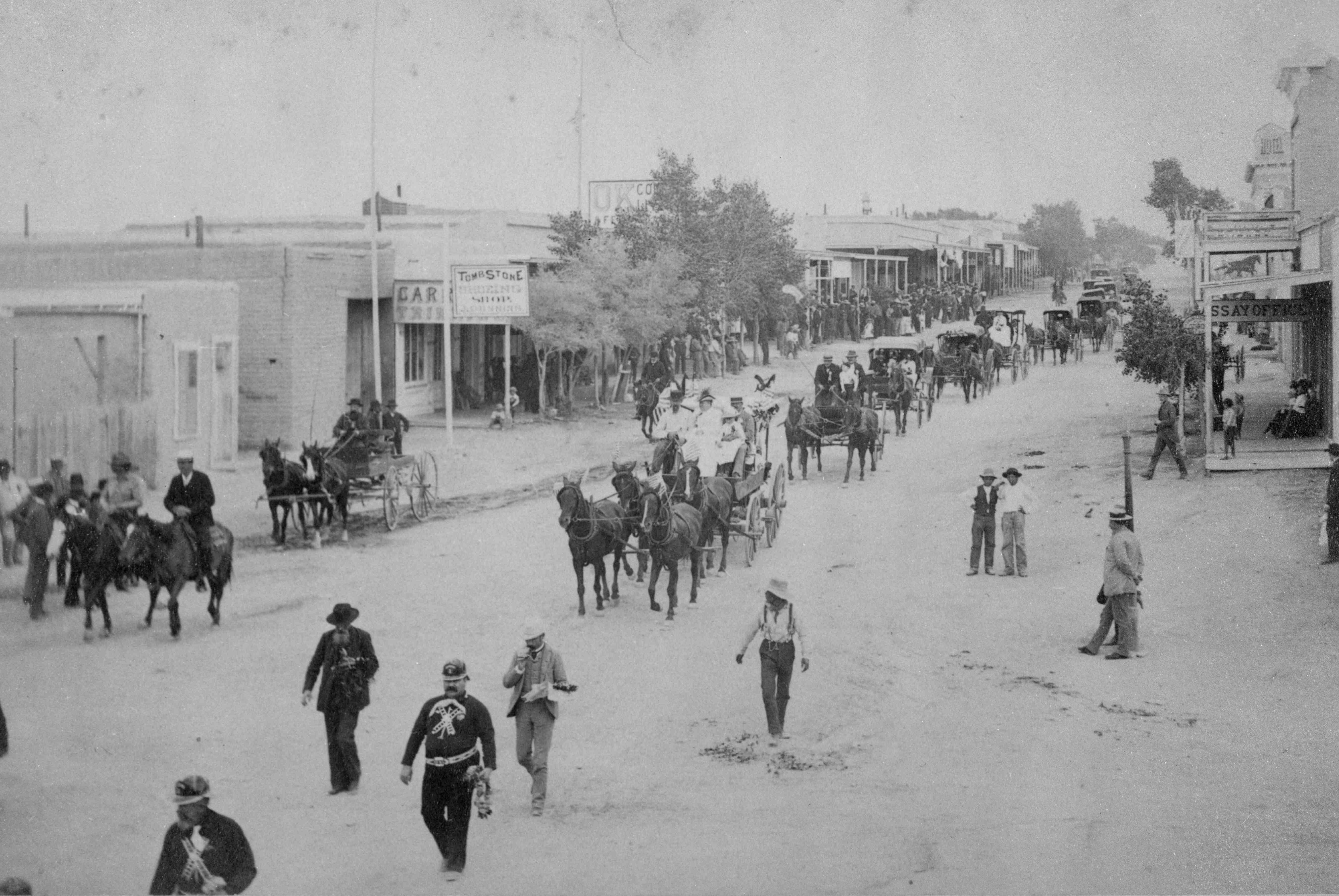
The story began in 1877, when Ed Schieffelin's discovery of significant veins of silver ore in southeastern Arizona's Cochise County held out alluring promises of wealth and opportunity for enterprising people from all walks of life. Between 1879 and 1880, Tombstone's population exploded from a handful of prospectors to nearly 6,000 residents. With this rapid influx of newcomers, Tombstone's fledgling social and political infrastructure began to take shape. Profits from the mines created a business-friendly town center with a pronounced need for law enforcement officers to maintain justice and order. To provide protection and reduce crime and violence, Tombstone's town leaders sought out men like Wyatt Earp, who had built his reputation as a gunfighter and lawman in Dodge City.
Tombstone soon became the center of a feud which pitted a group of prominent ranchers headed by the Clanton and McLaury families against a coalition of Tombstone businessmen represented by the Earps. The ranchers, who sold meat to the town and nearby Fort Huachuca, often "supplemented" their income by rustling Mexican cattle. These "Cowboys" were Democrats with strong ties to Texas and were supported by Cochise County Sheriff Johnny Behan. The Earp faction – Wyatt, his brothers Virgil, Morgan, and Warren, and their friend Doc Holliday – had the backing of Tombstone's Republican business elite, including Mayor John Clum (editor of The Tombstone Epitaph newspaper), mining magnate E.B. Gage, and Episcopalian minister Rev. Endicott Peabody.
Tensions between the two camps erupted in violence on October 26, 1881, in a narrow vacant lot behind the O.K. Corral. After a long night of poker that ended in an exchange of harsh words and a series of small scuffles, a confrontation appeared to be inevitable. According to historian Paula Marks, County Sheriff Behan insisted, "There is to be trouble between the Clanton and the Earp boys today."

Throughout the morning, various members of the vigilante businessmen's Citizens Safety Committee volunteered to intervene in the conflict, but Marshal Virgil Earp, seeking to avoid the involvement of armed citizens, respectfully declined their offers. Instead he sought Sheriff Behan's aid in disarming the Cowboys, who had now moved to the vacant lot behind the O.K. Corral next to photographer C.S. Fly's Photography Gallery and Boarding House (where Doc Holliday roomed). Behan, however, was unable to convince the Cowboys to give up their weapons – and unable to prevent the Earps and Doc Holliday from heading to the O.K. Corral to disarm the Cowboys.
A Brief Overview of the Shootout
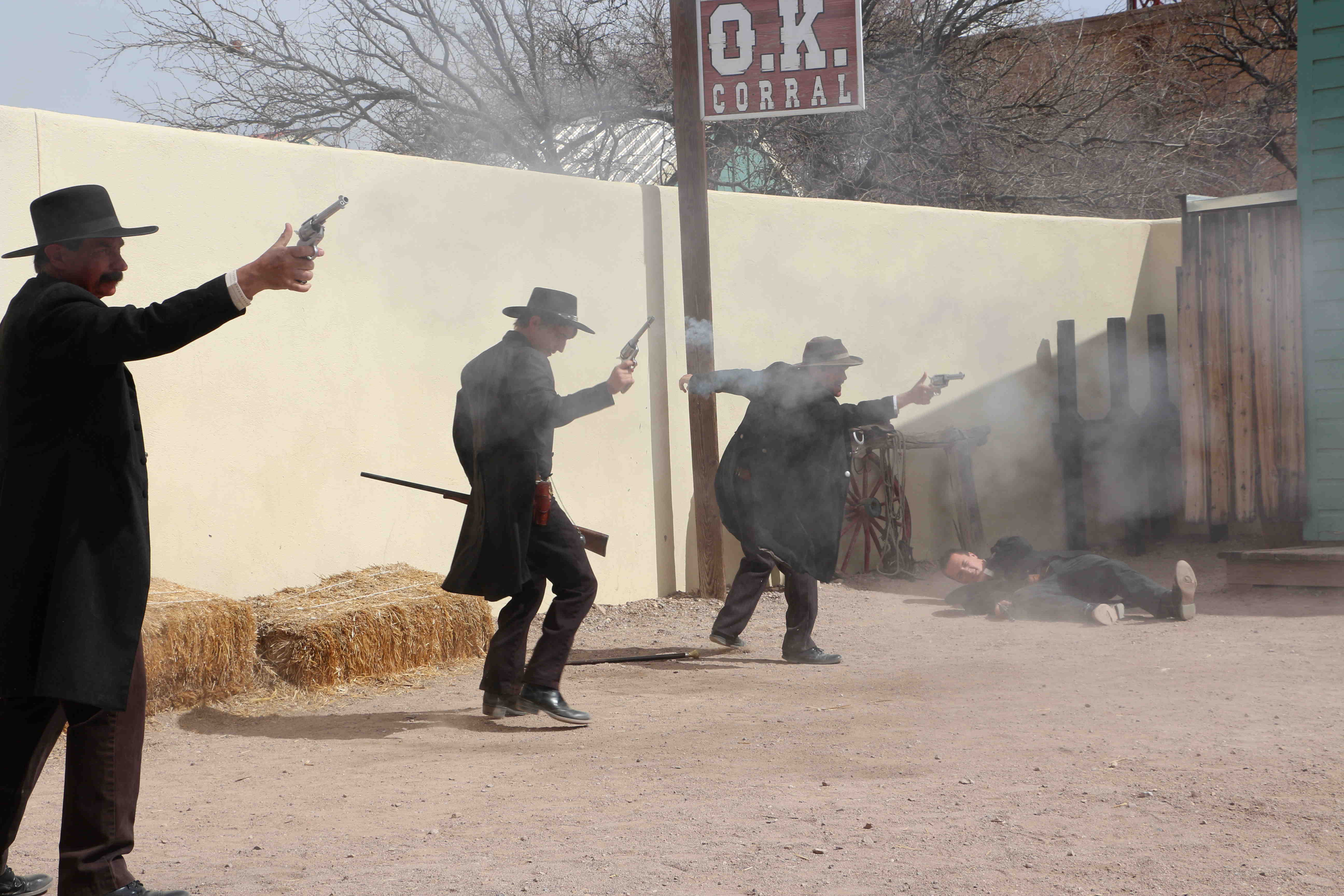
The stage was set. As the Earps turned the corner and entered the narrow passageway between the Harwood House and Fly's Photography Gallery and Boarding House, they met their rivals face-to-face. Each lawmen carried a six-shooter. In addition, Doc Holliday carried a shotgun hidden under his long coat. Less than six feet away from the Cowboys, Virgil called out, "Boys, throw up your hands, I've come to disarm you." Billy Clanton is said to have responded, "Don't shoot! I don't want to fight!" To which Wyatt Earp allegedly said, "You sons of bitches have been looking for a fight and now you have it." And bullets flew. Within thirty seconds, nearly thirty shots were fired.
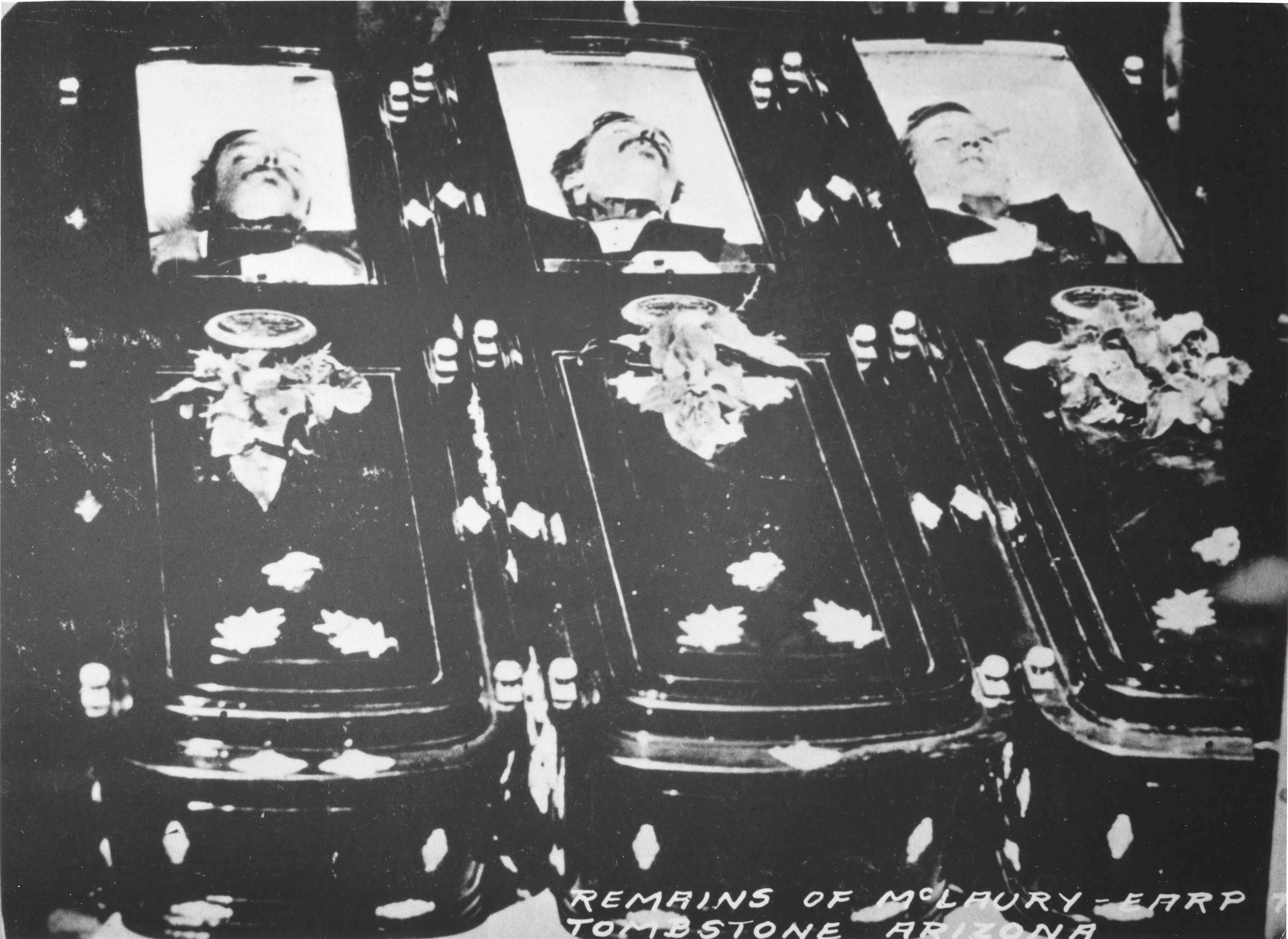
During the gunfight, Billy Clanton shot Morgan through the leg and Virgil through the shoulders. A bullet grazed Doc Holliday's hip. Cowboys Ike Clanton and Billy Claibourne were unarmed, and both ran away when the fighting began. The remaining three cowboys (Frank and Tom McLaury and Billy Clanton) were all killed. Tom McClaury, who also may have been unarmed, was shot and killed by a blast from Doc's shotgun. His brother, Frank McLaury, was shot in the stomach by Doc, then killed by a shot to the head by Doc or Morgan Earp. Billy Clanton (only 19 years old) was shot in the chest and the right arm which forced him to continue shooting left-handed. He died of his wounds 30 minutes later. Virgil and Morgan Earp were carried to a local hotel for safety and treated by local gunfight specialist Dr. Goodfellow. Only Wyatt escaped unharmed. As reported in the Tombstone Nugget newspaper on October 27, 1881, the gunfight reflected "one of the crimson days in the annals of Tombstone, a day when blood flowed as water ... a day always to be remembered as witnessing the bloodiest and deadliest streetfight that has ever occurred in this place, or probably in the Territory."
For a detailed account of the gunfight and the subsequent Earp-Holliday murder inquest come watch Tombstone's Historama, see our gunfight reenactment, and pick up your reprint of the 1881 Tombstone Epitaph at The Tombstone Epitaph Museum.
The Aftermath
Tombstone's coroner opened a formal inquest on October 27, 1881, which led to a month-long preliminary hearing before Justice of the Peace Wells Spicer. Ike Clanton's testimony obviously differed on key points from the recollections of the Earps and Doc Holliday. The townspeople were split in their allegiances, some believing the Earps used necessary force to quash a threat to Tombstone's civil order, others believing the lawmen were oppressors of individual rights. At the trial's end, Justice Spicer censured Virgil Earp but found insufficient cause for the defendants to be tried for murder: "I cannot resist the conclusion that the defendants were fully justified in committing these homicides." Subsequent waves of reprisals left Morgan Earp dead, Virgil Earp permanently disabled, and the Cowboys significantly weakened. Wyatt and Doc left Tombstone in April 1882 under indictment for the "vendetta ride" to avenge the shootings of Virgil and Morgan.
There are those who say Wyatt Earp was the Lion of Tombstone, the man who saw his unpleasant duty and brought peace to a troubled town. There are others who just as strongly proclaim that the Earps were no better than the men with whom they fought, and the killings were the outgrowth of outlaw activities in which all were involved. Still others say Wyatt Earp was really just a hired gun, doing what he was told to do, a man no better and no worse than a horde of like contemporaries throughout the unstable West. Today, evaluation is difficult, for we judge by present standards the men who lived in a different world, at a hard to imagine time, and under a flexible set of rules.
For nearly 150 years, the dramatic events of October 26, 1881, have captured the imagination of historians and storytellers. The Earps and the Cowboys have become iconic symbols of the untamed Western frontier. But of all the Old West gunbattles, why do these thirty seconds live on in history? In boomtowns like Tombstone, economic and political concerns dominated the community's culture, reinforced by personal social allegiances. Turbulent events like the Gunfight remain significant today not simply as a feud between "good" guys and "bad" guys, but rather because it reflects the complex realities of law and justice in the American West.
The Lawmen
Drawn to Tombstone by the alluring prospect of striking it rich in the town's silver boom, James, Virgil, and Wyatt Earp arrived with their common law wives in 1879. They were soon joined by their close friend Doc Holliday, followed in 1880 by Morgan and Warren. They operated gambling concessions, ran saloons, and invested in real estate and mining claims. However, it was the Earps tough, unyielding skill as lawmen able to bring order to rowdy frontier communities that brought them to the attention of Tombstone's Republican businessmen ... and cast the brothers as central figures in the West's political and economic struggle for control and power.
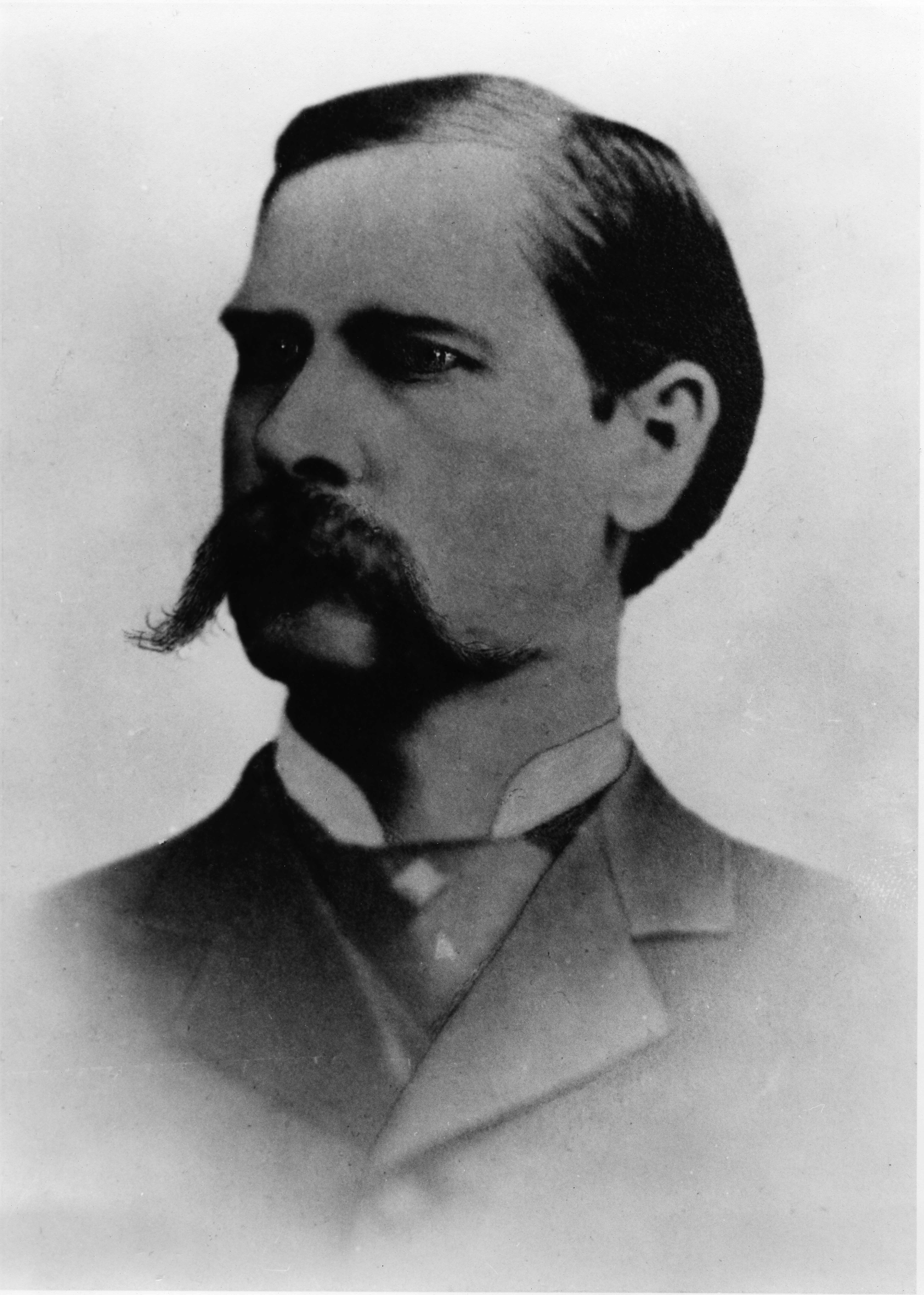
Wyatt Berry Stapp Earp
Born: March 19, 1848 (Monmouth, Illinois)
Died: January 13, 1929 (Los Angeles, California)
Celebrated by many as a man who brought law and order to America's boomtowns – while denounced by others as a revenge-seeker and murderer who took the law into his own hands – Wyatt Earp remains one of the Old West's most enigmatic figures. The subject of scores of movies, television dramas, and novels, Earp stands out as an iconic legend. Yet his actual life story reflects the thin line between respectability and notoriety that permeated America's frontier communities.
The middle brother of five, Wyatt was born in 1848 to Nicholas and Virginia Earp. A tall, quiet loner, Wyatt moved frequently with his family, settling in Illinois, Iowa, and California before returning east in 1869 to become constable in Lamar, Missouri. Married in 1870, his young pregnant bride died suddenly from typhoid. Devastated, Wyatt drifted, spending his twenties one step ahead of the law. Ever seeking his fortune in the next boomtown, he moved to Kansas to work in his brother James' brothel. When the summer cattle drives ended, he turned to police work in Wichita and Dodge City, keeping the Texas cowboys under control. Unfortunately, local businesses suffered when cowboys with money in their pockets were jailed. At age 31, Wyatt turned his sights to Tombstone. He became part owner of the gambling concession in the Oriental Saloon where he dealt faro. He also rode shotgun for Wells Fargo's stagecoaches. The Earp brothers, as representatives of Tombstone's businessmen, were soon feuding with the Clantons and McLaurys, ranchers who lived outside of town.
In April 1881, with passage of Tombstone's ordinance preventing citizens from carrying guns in town, tensions between the Earps and the Cowboys mounted. Stagecoach robberies, cattle rustling, and Wyatt's loss of the lucrative county sheriff position to Johnny Behan, a friend of the Clantons and McLaurys, compounded the conflict. Political and personal disputes erupted on October 26, 1881.
Armament: Wyatt probably carried the Colt .45 single-action Peacemaker, with a 7½" blued steel barrel and wood handle, presented to him by The Epitaph newspaper editor John Clum. The gun was tucked in Wyatt's waistband and reached through a pocket opening in Earp's long coat.
During the Gunfight: Wyatt is reported to have shouted, "You sons of bitches have been looking for a fight, and now you can have it." In the first chaotic moments, Wyatt briefly grappled with Ike Clanton as the unarmed cowboy fled the scene. Wyatt was one of the first to fire, shooting Frank McLaury in the stomach. When the smoke cleared, only Wyatt walked away unharmed.
After the Gunfight: Arrested and tried for the murder of the Cowboys, the Earps and Doc Holliday were acquitted in November 1881 by Judge Spicer. With tensions running high, Virgil was shot and crippled in December and five months later, in May 1882, Morgan was assassinated. Wyatt, now a Deputy US Marshal, sought revenge. His "vendetta ride" (March 20-April 15, 1882) resulted in the deaths of Cowboys Frank Stillwill and Curly Bill Brocious. Indicted for murder, Wyatt and Doc Holliday fled Arizona for Colorado. Wyatt reconnected with his Tombstone lover, Josephine Marcus, and the couple moved to San Francisco, where he gambled on horses, invested in real estate, and refereed boxing matches. In 1897, they followed the next boom to Alaska, opening a saloon in Nome at the height of the Gold Rush. Returning to Los Angeles in 1901 nearly $80,000 richer, they staked claims for gold in the Mohave Desert, and Wyatt served as an advisor for Hollywood's new silent Western films. But Tombstone continued to haunt their lives. Aided by John Flood, Wyatt and Josie began crafting his memoirs. He died of cancer on January 13, 1929, and was buried in Josie's family plot in Colma, California. Five years later, Stuart Lake's film biography, Frontier Marshal, was released – and the legend of Wyatt Earp and the Gunfight at the O.K. Corral took hold as a symbolic icon of the untamed frontier.
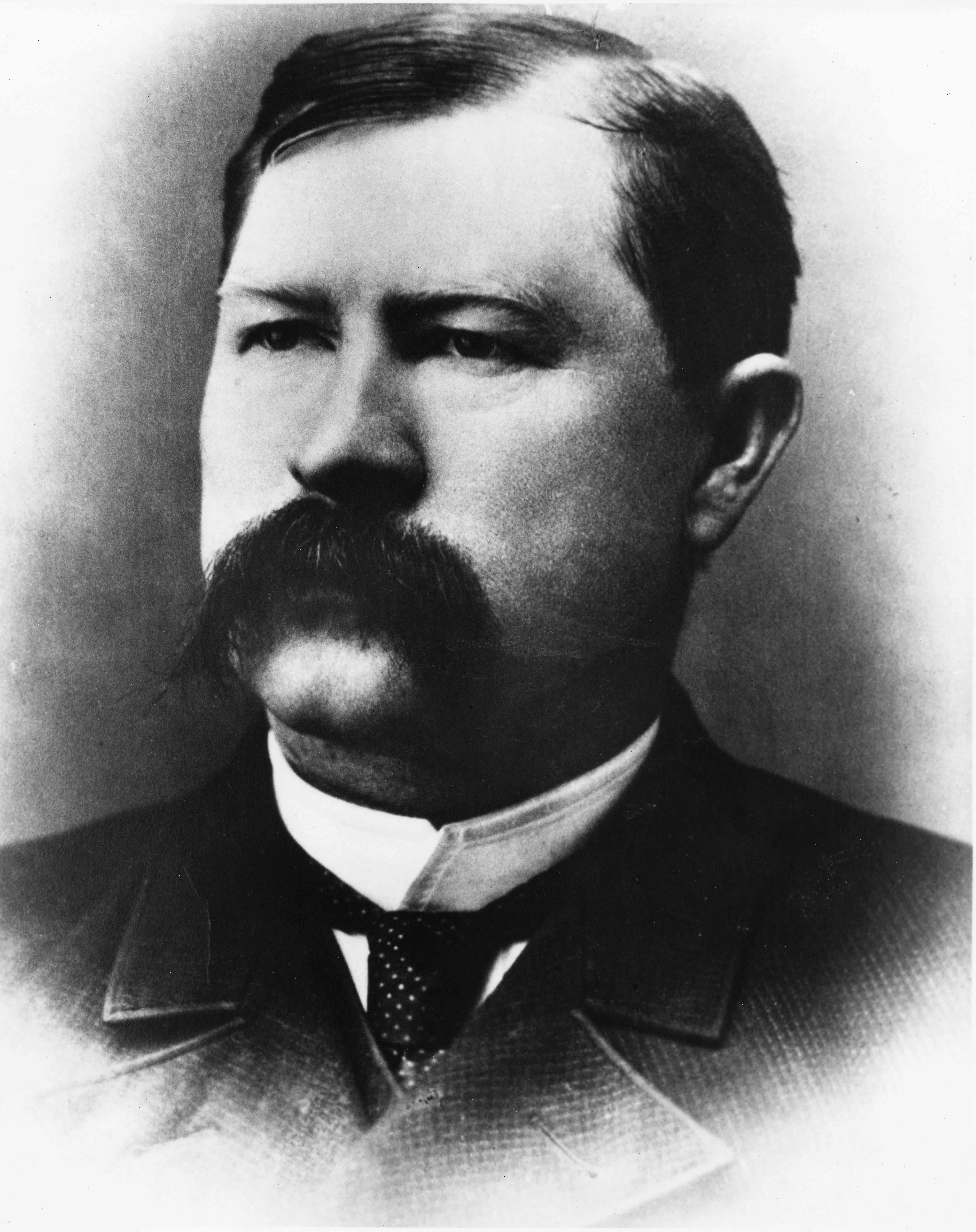
Virgil Walter Earp
Born: July 18, 1843 (Hartford, Kentucky)
Died: October 19, 1905 (Goldfield, Nevada)
Born in 1843 to Nicholas and Virginia Earp, Virgil Earp was the true lawman of the Earp family. The second of five Earp sons, he joined the Union Army in 1862, mustering out in 1865. Working primarily as a lawman and a gambler, he traveled with his parents to California then back east to Missouri and Iowa before joining his brother Wyatt on the Wichita police force in the mid-1870s. Moving to Prescott, AZ, he was appointed US Deputy Marshal in 1879 - and one month later moved with his family to Tombstone. In October 1880, following the shooting death of Tombstone's Marshal Fred White, Virgil was appointed as White's successor. He served for a month before losing the 1880 election for US Marshal. Months later, he was again appointed Tombstone Chief of Police on June 28, 1881. Virgil represented the law in Tombstone. In fact, much of what Wyatt has been credited with was actually Virgil's doing. Numerous accounts show that Virgil tried to diffuse the gunfight participants on that fateful October 26th – until the shooting began.
Armament: Virgil held Doc Holliday's cane in his right hand. A Colt .45 Peacemaker with a 4¾" barrel and wood handle was hidden in his belt.
During the Gunfight: As Chief of Police enforcing Tombstone's gun ordinance, Virgil shouted for the Cowboys to "Throw up your hands...I want your guns!" He was shot by Billy Clanton or Frank McLaury through the calf of his right leg. Raising Doc's cane, Virgil fired back at Billy Clanton.
After the Gunfight: Exactly eight weeks after the gunfight, on December 28, 1881, Virgil was ambushed as he walked across Fifth Street near Allen Street. Shot in the back by three rounds, his left arm was shattered. Dr. Goodfellow removed 4" of arm bone but saved his arm, leaving Virgil permanently disabled. Speculation has it that Frank and Tom McLaury's older brother Will was involved in the assassination attempt, either directly or monetarily. However, there were no convictions due to insufficient evidence. On March 20, 1882, following his brother Morgan's assassination, the Earps left Tombstone under heavy guard, accompanying Morgan's body to the Earp family home in California for burial. After two years of rehabilitation, Virgil joined Southern Pacific Railroad as a special agent. For the next two decades, he wandered around mining camps in Nevada and California, prospecting and serving as a frontier lawman. At age 62, Virgil died of pneumonia on October 19, 1905, in Goldfield, Nevada. He was buried in Portland, Oregon, at the request of his daughter Nellie Jane Bohn.
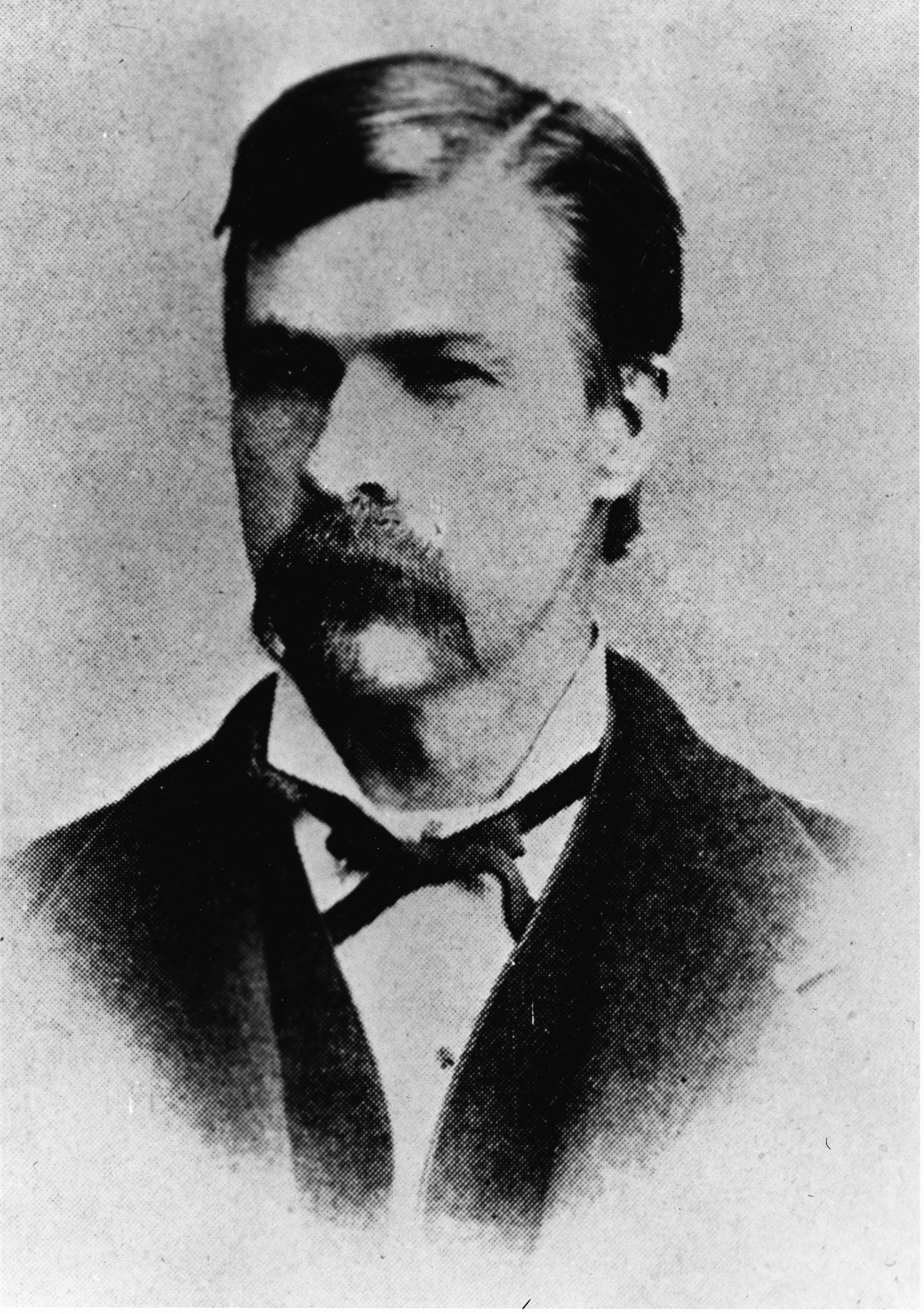
Morgan Seth Earp
Born: April 24, 1851 (Pella, Iowa)
Died: March 18, 1882 (Tombstone, Arizona)
Morgan Earp worked primarily as a stagecoach guard. The younger brother of the "Fighting Earps," Morgan has been characterized as quick to laugh and quick to anger. One account (Mrs. M.J. King) during the trial revealed Morgan, saying "Let them have it" to which Doc Holliday replied, "All right." 30-year-old Morgan Earp had been deputized by Virgil as a special policeman about a month before the gunfight.
Armament: Morgan held a single-action six-shooter. He kept a Colt .45 Peacemaker with a 4¾" barrel and wood handle, tucked in his coat pocket.
During the Gunfight: One of the first to fire, Morgan shot Billy Clanton in the chest and was himself shot in the right shoulder, probably by the wounded Billy Clanton. The bullet went sideways though his body just missing his backbone and exited out his left shoulder.
After the Gunfight: On March 18, 1882, five months after the gunfight, Morgan was shot in the back by assassins while playing billiards at Campbell and Hatch's Saloon in Tombstone. Another bullet barely missed Wyatt. Although Will McLaury had long since left Tombstone for his home in Fort Worth, he was still suspected of being involved. Morgan died at the age of 30 within the hour.
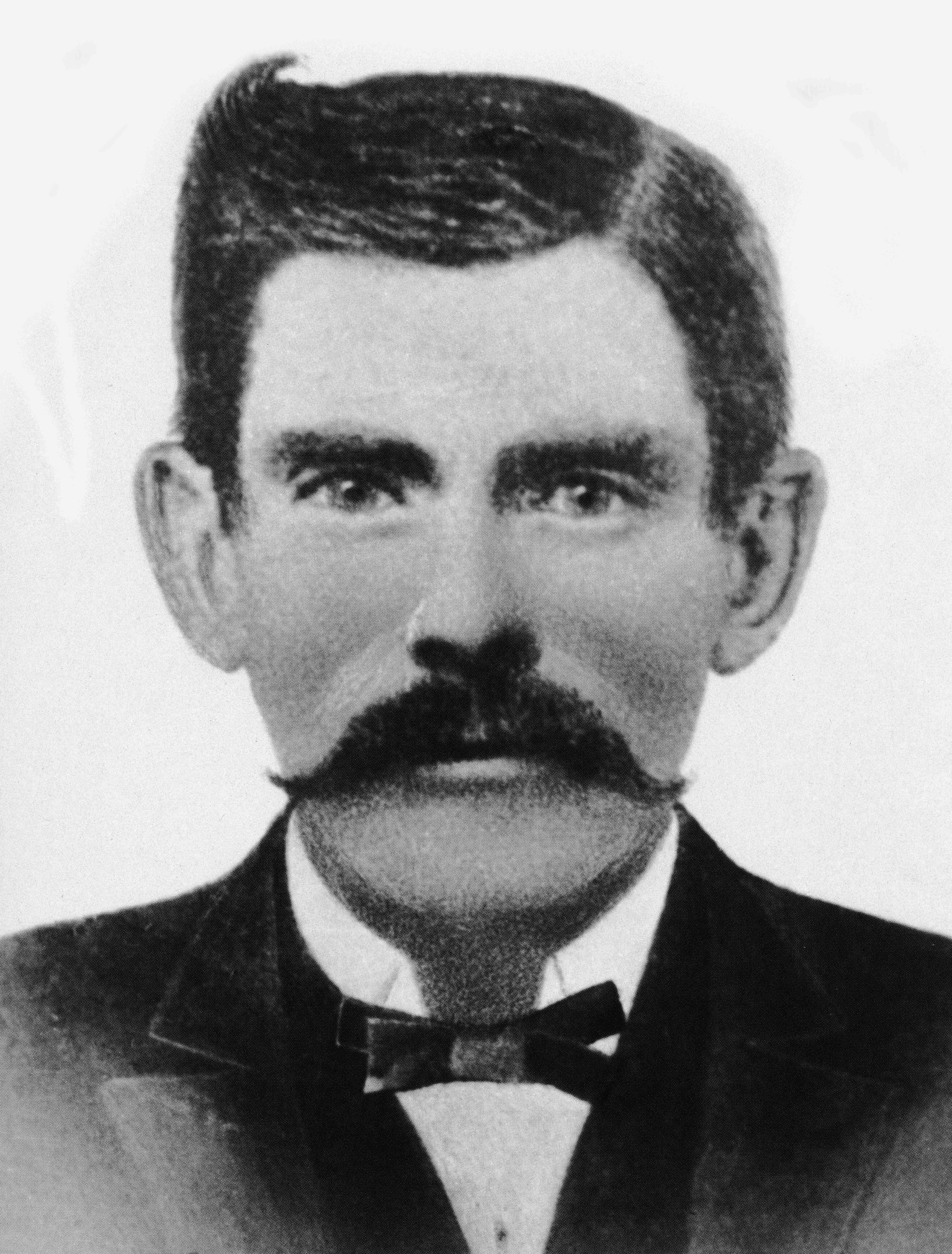
John Henry "Doc" Holliday
Born: August 14, 1851 (Griffin, Georgia)
Died: November 8, 1887 (Glenwood Springs, Colorado)
Dr. John "Doc" Holliday was a private citizen -- dentist, gambler, drunkard, and gunfighter. With tuberculosis and a deathwish, Holliday came to Tombstone with a trunk full of reputations. He had made dozens of enemies by the time he got there and one friend, Wyatt Earp, whose life he had once saved. Doc was asked by Virgil to help disarm the Clantons. But as the Cowboy side of the gunfight story has it, Doc and Morgan were first to draw.
Armament: Doc was hiding a shotgun under his coat and carried a Colt .45 nickel-plated pistol in his hand.
During the Gunfight: Probably the first to fire, Doc shot Frank McLaury in stomach with his pistol, then he hit Tom McClaury with a load of buckshot from his shotgun. A bullet grazed his hip.
After the Gunfight: At age 36, Doc died bedridden and delirious from miliary tuberculosis on November 8, 1887, in Glenwood Springs, Colorado.
The Cowboys
In the 1880s, the term "Cowboy" was often synonymous with "cattle rustler." Families like the Clantons and McLaurys stole cattle from Mexican ranchers to supply meat to unscrupulous Tombstone merchants. The Earp lawmen could do little to stop these crimes since cattle rustling was officially a county matter and Cochise County Sheriff John Behan was a Cowboy sympathizer. Maintaining a degree of law and order, however, was essential to the success of Tombstone's mining interests. As frustration of the town's powerful business elite grew with Behan's inaction, Tombstone citizens remained divided. Many supported the Earps, but small businesses profited from Cowboy patronage. The result was a series of tense confrontations between the Earps and the Cowboys which led on October 26, 1881, to the infamous gunfight.
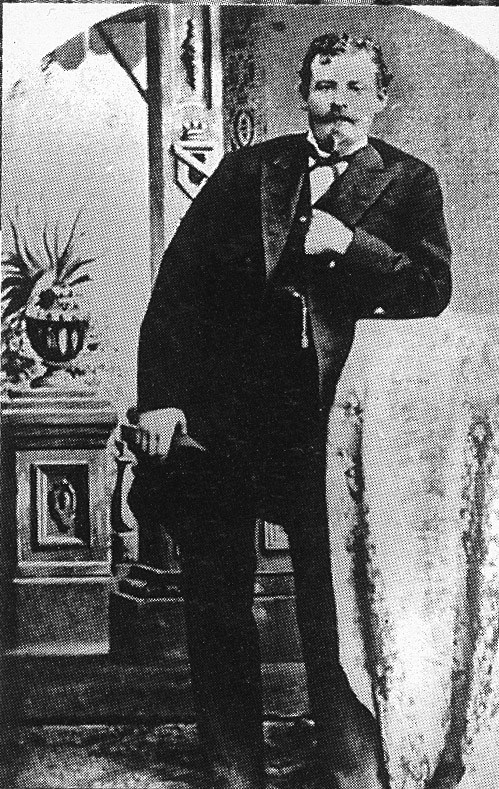
Joseph Isaac "Ike" Clanton
Born: ca. 1847 (Callaway County, Missouri)
Died: June 1, 1887 (Springerville, Arizona)
Born in Missouri in 1847, Ike Clanton was one of seven children. The Clanton family, headed by "Old Man" Clanton, moved to the Tombstone area around 1877, settling on a ranch near the San Pedro River about 14 miles southwest of Tombstone. By the 1880s, the Clanton ranch was one of the most profitable in Cochise County, with high profit margins generated from rustling cattle stolen from Mexico. Ike was known for his reckless behavior and quick temper. He reportedly was a heavy drinker. On the morning of October 26, 1881, he was arrested, fined, and released by the Earps for violating Tombstone's gun ordinances. Certainly, he was the final catalyst in the events that led to the shootout.
Armament: Unarmed. Ike's weapons had been taken away earlier that day by Virgil Earp.
During the Gunfight: After briefly grappling with Wyatt, the unarmed Ike Clanton ran from the fight into the front door of C.S. Fly's Photography Gallery and Boarding House, then out through Fly's back door all the way to a dance hall on Allen Street.
After the Gunfight: Ike managed to dodge Earp bullets during the gunfight and Wyatt's ride of revenge afterwards. Three days after the shootout he filed first-degree murder charges against the Earps and Doc Holliday for the deaths of his brother Billy and the McLaurys, leading to the arrest of Wyatt and Doc. During the month-long inquest before Judge Spicer, Ike's inconsistent testimony resulted in exoneration of the Earps and Holliday. Six years later, while resisting arrest for cattle rustling, Ike was shot and killed by Deputy Marshal Jonas V. Brighton on June 1, 1887, at age 39.
In 1996, Terry "Ike" Clanton, a Clanton descendent, reportedly found the grave of Ike Clanton. Terry has tried unsuccessfully to interest Tombstone city officials to have the body exhumed and placed next to the graves of "Old Man" Clanton and Billy Clanton in Tombstone's Boothill Graveyard.
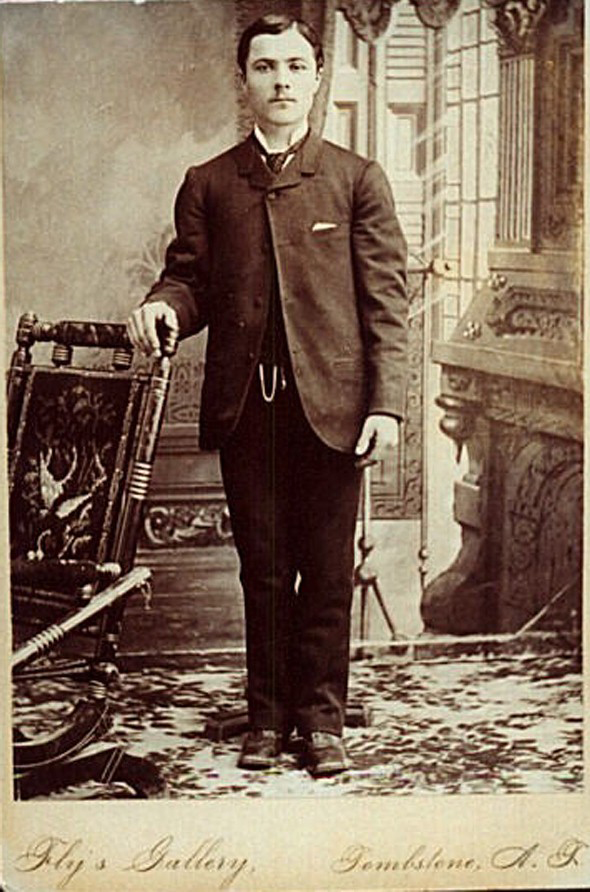
William Harrison "Billy" Clanton
Born: ca. 1862 (Hamilton County, Texas)
Died: October 26, 1881 (Tombstone, Arizona)
The youngest of the Clanton boys, Billy was born in Texas around 1862. Widely regarded as hard-working and level-headed, his deep loyalty to the Cowboys, however, pulled him into the Clanton family cattle rustling business. As a rancher, Billy first met and befriended Frank and Tom McLaury at the Jones ranch - formerly owned by "Old Man" Clanton - along the Gila River near Camp Thomas. Billy wasn't an innocent young man by any stretch of the word. Shortly after the Earps arrived in Tombstone in 1879, he was caught by Wyatt in possession of Wyatt's stolen horse. By most accounts, Billy was trying to get Ike out of Tombstone the day of the shootout.
Armament: Billy carried a Colt 1873 .44-40 caliber single-action six-shooter revolver with a 7½" blue barrel. Its serial number is recorded in the Spicer hearing transcript. His Winchester rifle was stored in a saddle scabbard on his horse nearby.
During the Gunfight: When the gunfight started, Billy shouted, "Don't shoot me... I don't want to fight!" But after being shot in the chest by Morgan, Billy did not back down. He was the only Cowboy to inflict any real damage on the Earps. Despite his serious chest wound and his right arm broken from a shot to his wrist, he continued firing left-handed, injuring Virgil in the leg and Morgan in the shoulder. After the gunfight ended, he continued to plead for more bullets from photographer C.S. Fly. In great pain, he was carried with Tom McLaury to a building on the corner of Fremont and Third Streets. Even after receiving two syringes of morphine, he died in agony about 30 minutes after the last shot was fired.
After the Gunfight: Billy died at age 19 in the gunfight and was buried in Tombstone's Boothill Graveyard, with Frank and Tom McLaury on one side and his father on the other.
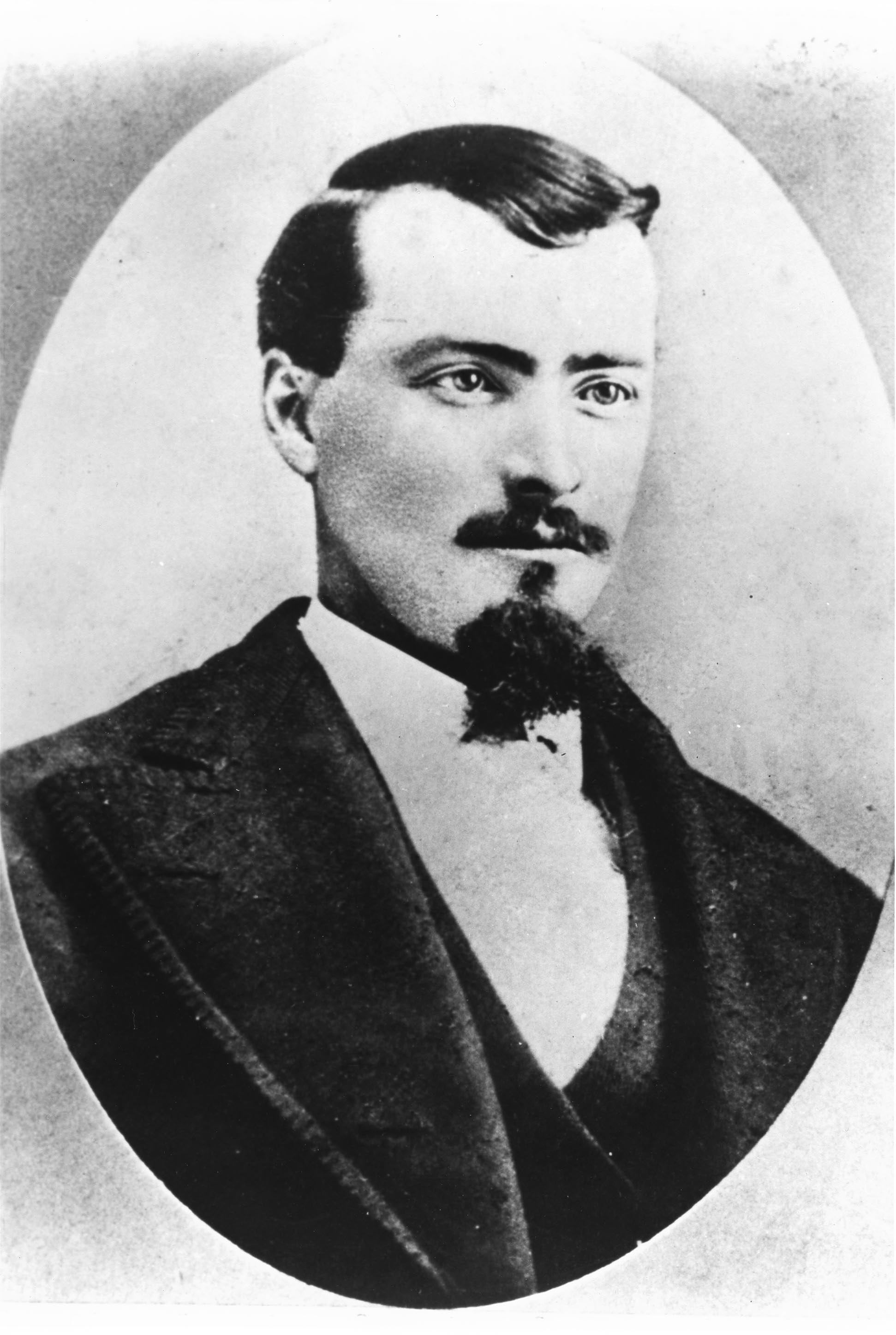
Robert Findley "Frank" McLaury
Born: March 3, 1849 (Kortright / Merideth, New York)
Died: October 26, 1881 (Tombstone, Arizona)
Frank McLaury (or "Rob," as the family called him) was born in New York in 1849, the eighth of eleven McLaury children. Rob was only 11 days older than Wyatt Earp and, like Wyatt, he belonged to the generation of boys who just missed the "glory" of the Civil War. Unlike Wyatt, Rob remained at his father's home well into his twenties. When in 1875 his widowed 65-year-old father took a second wife who was only two years younger than Rob, Rob and his brother Tom decided it was time to leave. They headed west for Fort Worth, TX, where their older brother Will had recently opened a law practice. About this time Rob stopped using his given name and began using a more modern variation of his middle name, "Frank."
Joining a cattle drive in 1878, the McLaury brothers arrived in Tombstone, where they got a job working for "Old Man" Clanton. They lived on a ranch near Hereford in the Sulphur Springs Valley close to the Mexican border along what was called "Rustler's Trail". This trail started near the Clanton Ranch, and was used to move stolen cattle to and from Mexico. Joining the loose network of Cowboy ranchers, the McLaury brothers soon found success in the cross-border cattle rustling trade.
Armament: Frank carried a Frontier Colt 1873 .44-40 caliber single-action six-shooter revolver with a 7½" blue barrel. His Winchester rifle was stored in a saddle scabbard on his horse. According to H.M. Matthews testimony at the Spicer inquest, Frank's six-shooter had two loads remaining. If Frank's pistol hammer was lying on an empty chamber, as most people carried their sidearms back then, then he only fired three shots.
During the Gunfight: As Wyatt mentioned in his testimony at the Spicer hearing, Frank was reputed to be fast with a gun. In the opening seconds of the gunfight he was shot in the stomach by Wyatt, as the Earps aimed to neutralize the most dangerous shooter. Grabbing his horse by the reins, Frank struggled across Fremont Street. Despite being seriously wounded, he was able to regroup sufficiently to hit Morgan and graze Doc in the hip. Frank may have wounded Virgil as well. Frank was killed almost instantly from a shot to his head fired by Morgan or Doc. He died on the sidewalk across Fremont Street.
After the Gunfight: Frank died at age 33 in the gunfight and was buried in Tombstone's Boothill Graveyard.
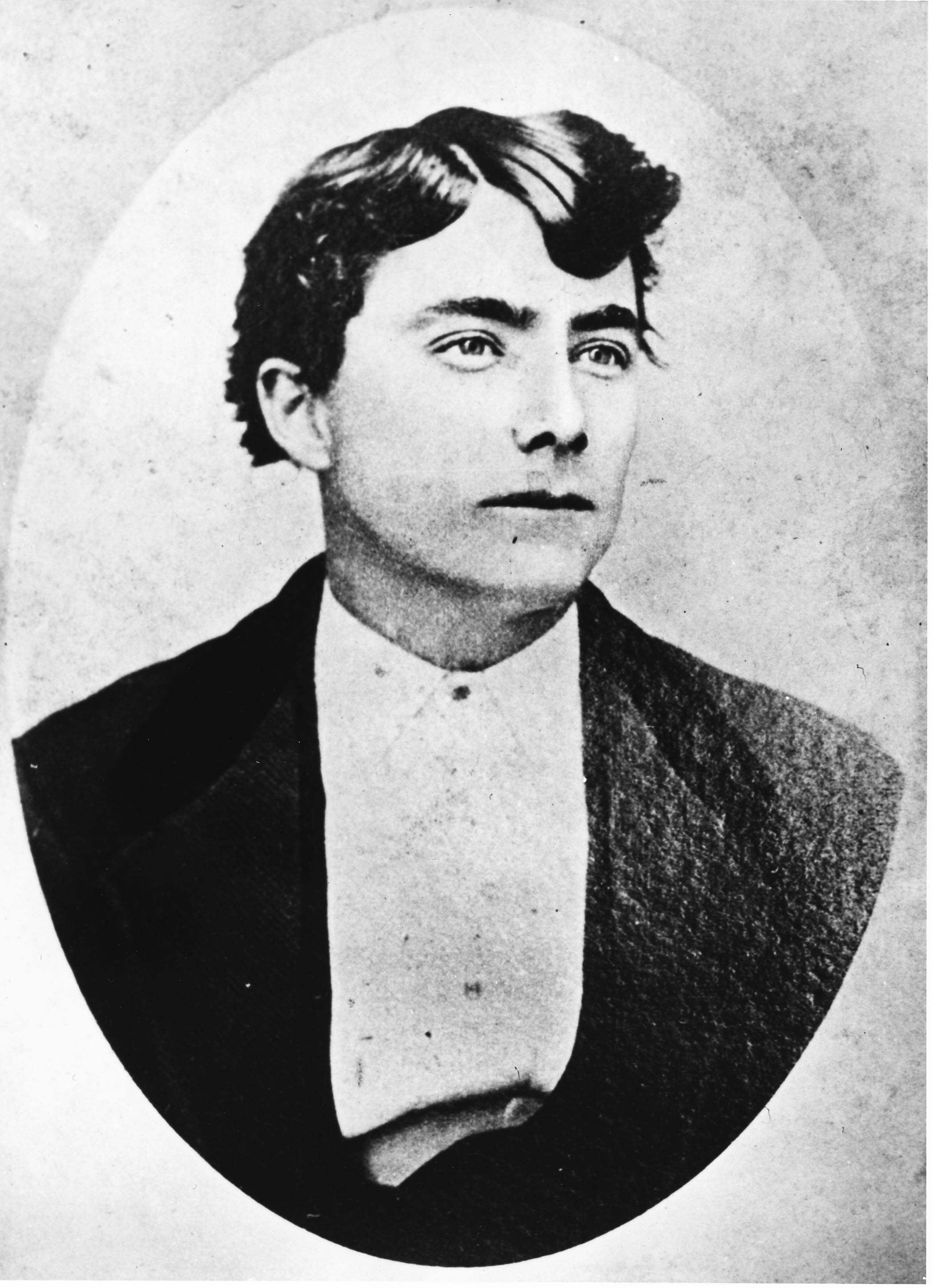
Thomas "Tom" McLaury
Born: June 30, 1853 (Kortright / Merideth, New York)
Died: October 26, 1881 (Tombstone, Arizona)
Thomas Clark McLaury was born in 1853 in New York, the tenth of eleven McLaury children. Tom has been portrayed as mild mannered, a hard worker, often trying to diffuse high tensions on many occasions. He's also been cast as a "Cowboy Banker," a quick draw, and the brains behind the McLaury Ranch enterprises. Tom was well-liked in Tombstone – and his death, above all, may have generated growing animosity towards the Earps during the Spicer inquest.
Armament: Witnesses differed as to whether Tom was armed during the shootout. Although a skilled gunfighter, he appeared likely to be unarmed having left his Winchester carbine at the West End Corral and his six-shooter at the Capital Saloon. No revolver or rifle was found near his body and he was not wearing a cartridge belt. It is reported that he did try to grab the Winchester from Billy Clanton's startled horse.
During the Gunfight: When the shooting started, Tom ducked behind Billy Clanton's horse. Tom may have shouted "I'm not armed" but when the horse bolted, he was shot by Doc at point-blank range with a load of buckshot. The fatal shotgun blast left 12 buckshot wounds in a 4" circle in his right side. At the Spicer inquest, the defense claimed Tom was going for the rifle in the saddle scabbard on Billy Clanton's horse. Tom staggered onto Fremont Street stumbling down toward Third, where he collapsed on the corner. A few minutes after the gunfight ended, he and Billy Clanton were moved to a nearby building on Fremont and Third Streets.
After the Gunfight: Tom lived just long enough to be carried indoors, but never said a word. He died without speaking minutes after the gunfight at age 28 and was buried in Tombstone's Boothill Graveyard.
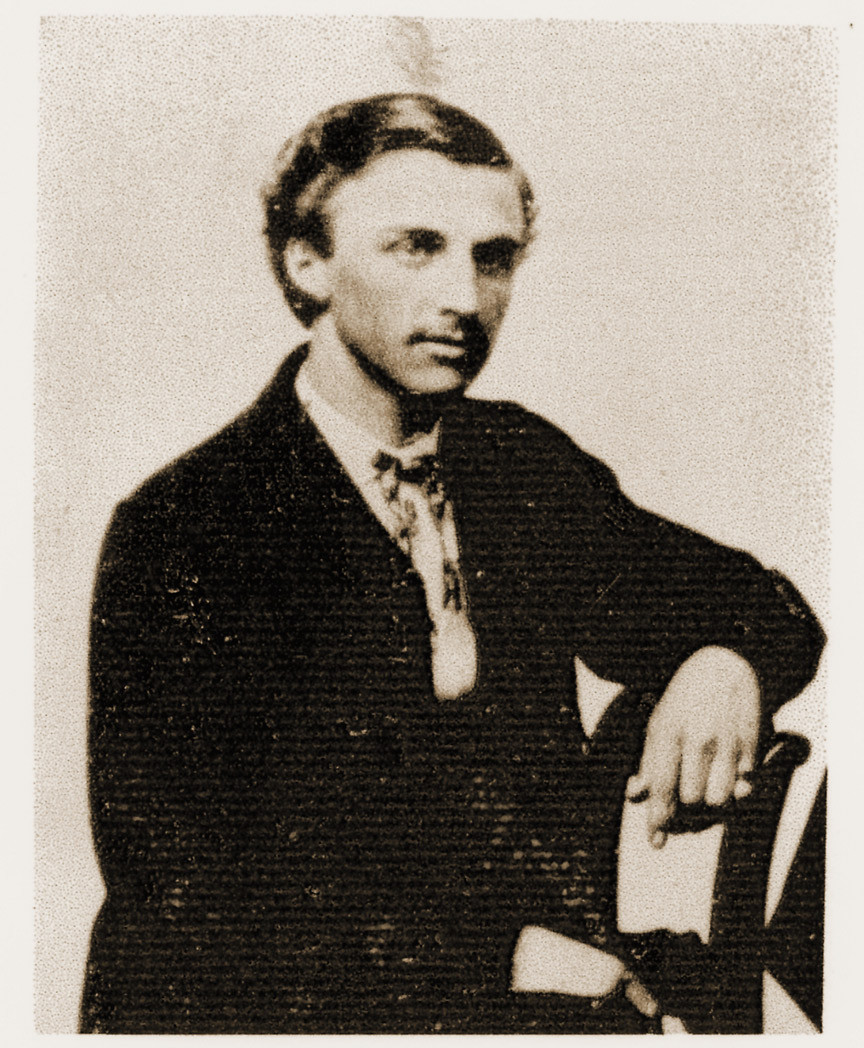
William Floyd "Billy" Claiborne
Born: October 21, 1860 (Yazoo County, Mississippi)
Died: November 14, 1882 (Tombstone, Arizona)
Born in Mississippi in 1860, Billy Claiborne drove cattle to Arizona Territory in 1879 for rancher John Slaughter. He worked in the silver mines and helped the Clantons rustle cattle.
Armament: Billy was unarmed, having checked his guns at Kellogg's Saloon on October 25, the day before the gunfight, in accordance with the Tombstone ordinance that required anyone entering town to immediately deposit their weapons at a corral, hotel, or saloon.
During the Gunfight: Just before the shooting began Billy fled into C.S. Fly's Photography Gallery and Boarding House.
After the Gunfight: Billy testified against the Earps and Doc Holliday at the Spicer inquest, supporting the testimony of Ike Clanton. He was mocked by Cowboys for not supporting his friends. A year later, on November 14, 1882, he was killed by "Buckskin" Frank Leslie following a drunken altercation in Tombstone's Oriental Saloon. Billy was buried in Tombstone's Boothill Graveyard.
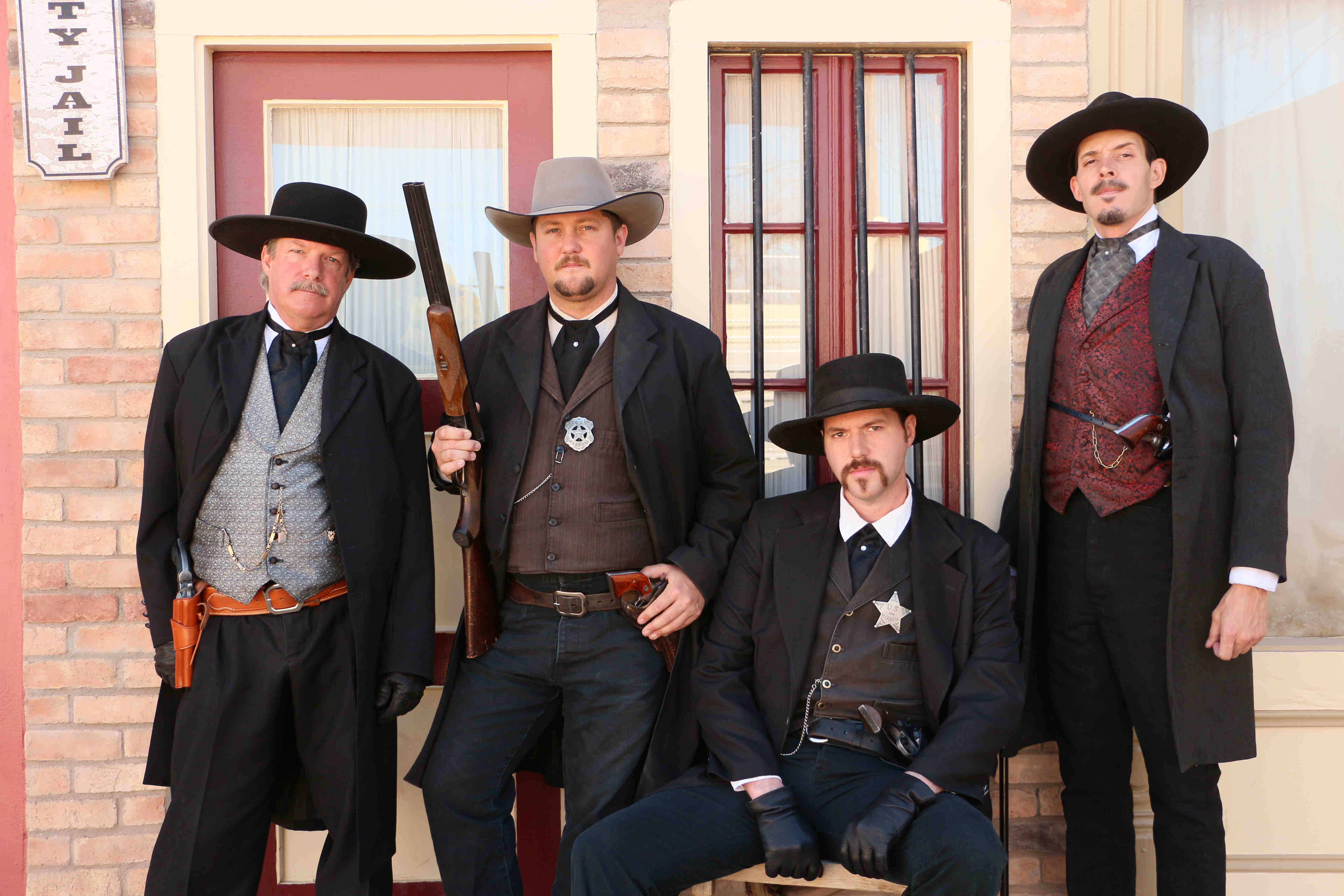
The Lawmen: Our Actors
The Cowboys: Our Actors